The Flood
The Flood is the culminating environmental and symbolic event of The Grapes of Wrath, a relentless rainstorm that swells the streams, inundates the boxcar camp where the Joads and other migrant families have taken shelter, and forces them to flee to higher ground. It destroys the makeshift levee the men build, drowns the truck, and precipitates the stillbirth of Rose of Sharon's baby. More than a natural disaster, the flood acts as the novel's final, crushing pressure—dissolving the last remnants of the family's physical security and material hope, while simultaneously driving them toward the radical, communal act of survival that closes the book.
Origins and Arrival
The flood begins as a meteorological event that mirrors the novel's opening dust storm, completing a climatic cycle of destruction. Over the high coast mountains and across the valleys, gray clouds march in from the ocean, driven by a fierce, silent wind. The rain starts with gusty showers and pauses, then settles into a single, steady tempo of small drops that cuts midday light to evening. For two days the dry earth drinks the moisture, but once saturated, puddles form and little lakes appear in the fields. The mountains fill, hillsides spill into streams, and the streams become roaring freshets that cut out the roots of cottonwoods and bring down trees. The muddy water creeps up the banks until it spills over into fields, orchards, and cotton patches, turning level fields into broad, gray lakes. The earth whispers under the beat of the rain, and the streams thunder under the churning freshets.
The Rising Water and the Failed Levee
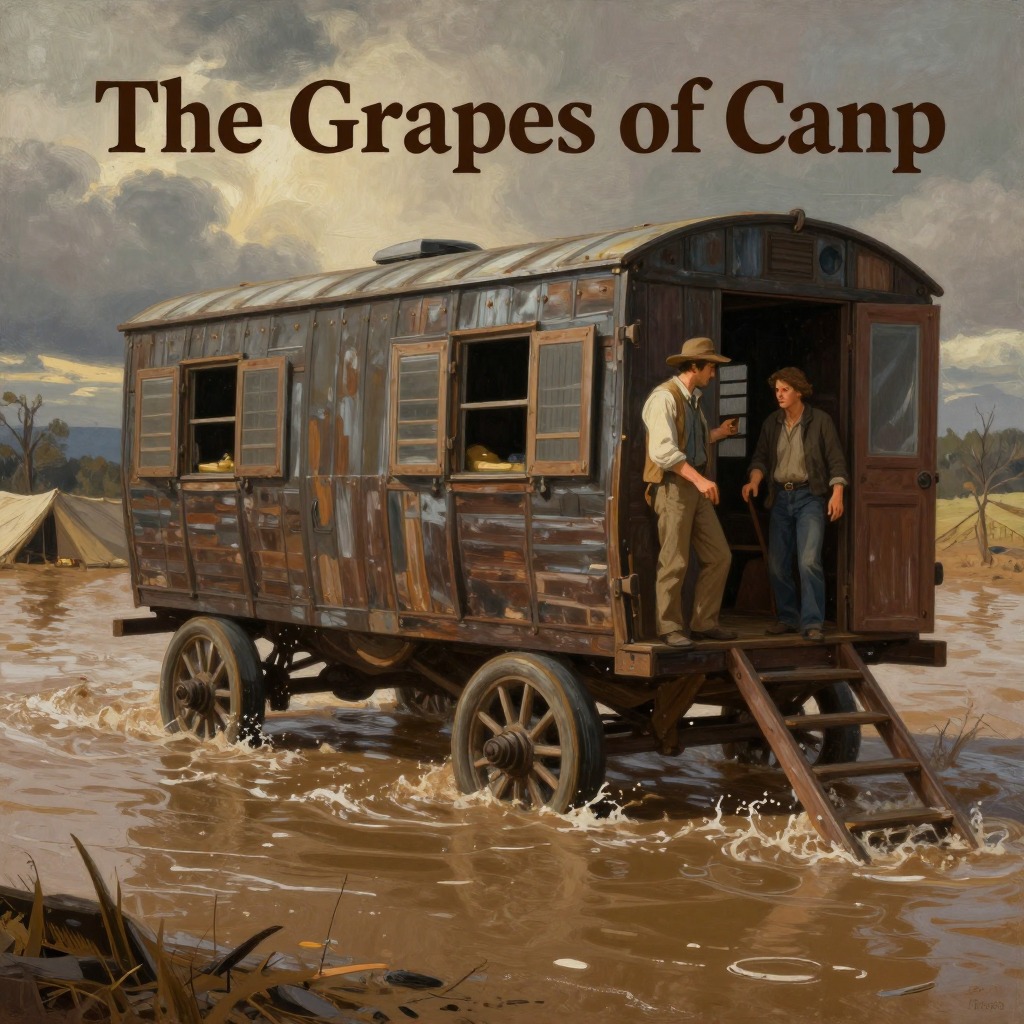
The flood directly threatens the Joads' boxcar camp, which sits on a low flat beside a stream. On the third day of rain, Pa Joad and Uncle John watch the water rise, and Pa marks its advance with a twig. The men organize a desperate effort to build a levee, working with a fury born of necessity. They heave mud into a long embankment, weave live willow whips into a mat, and kick them into the bank. The work continues through the night, beyond weariness, their faces set and dead, their movements jerky like machines. But the stream rises inexorably. A great cottonwood tree, its roots undercut by the current, topples into the water, snags on the new embankment, and tears it open. The water pours through, swirling around the men's ankles and knees. The levee is lost. The flood sweeps into the flat, under the cars and automobiles, and the truck's engine is fouled by water, its battery dead.
Consequences: Stillbirth and Displacement
The flood's immediate human cost is devastating. Rose of Sharon, weakened by a cold and fever, goes into labor prematurely. Ma Joad and Mrs. Wainwright attend her through the night, walking her back and forth between pains. The baby is born, but it is a blue, shriveled little mummy that never breathed. Uncle John, burdened by his own sense of sin, takes the apple box containing the stillborn infant and sets it adrift in the swift current, saying, "Go down an' tell 'em. Go down in the street an' rot an' tell 'em that way." The family is now stranded, their truck useless, their food gone, and the water rising inside the boxcar. They are forced to abandon their possessions and wade through breast-high water to the highway, carrying Rose of Sharon.
The Flood as Symbol and Catalyst
The flood functions as the novel's ultimate expression of impersonal, overwhelming force—a natural disaster that compounds the man-made disasters of dispossession and exploitation. It strips the Joads of their last material resources and their last hope for a settled life. Yet it also acts as a catalyst for the final, radical act of human connection. Driven from the boxcar, the family takes shelter in a rain-blackened barn, where they find a boy and his father, the man starving and near death. In the barn's dark, whispering interior, Rose of Sharon, having lost her own child, offers her breast milk to the starving stranger. The flood, which has destroyed so much, creates the extremity that makes this gesture necessary and possible. It is the final pressure that transforms the family's focus from survival of the self to survival of the other, completing the novel's movement from "I" to "we."